
Case Picking in Ontario Warehouses: 5 Ways to Improve Accuracy & Throughput
Quick answer

The fastest way to improve case picking accuracy and throughput is to fix the setup around your pickers, not to add more people. Slot your fastest-moving products at easy-reach heights, shorten pick routes, use carton flow so the next case always rolls to the front, keep restocking out of the pick aisle, and match each storage system to the product it holds. Most of these changes can be made inside your existing pallet racking.
Why case picking deserves a closer look
Case picking is where many Ontario warehouses quietly lose the most time. Pickers handle heavy cartons, cover a lot of ground, and repeat the same motions hundreds of times a shift. Small inefficiencies add up fast.
A wrong case also costs more than it looks. It means a short shipment, a credit note, a return trip, and an unhappy customer. In wholesale, retail replenishment and 3PL work, those errors can put an account at risk.
When picking slows down or mistakes creep in, the instinct is to add labour or overtime. With today’s labour costs and tight hiring market, that is the most expensive option. In most cases, the bigger gains come from changing how product is stored, placed and presented to the people picking it.
What is case picking?
Case picking means pulling full cases or cartons from storage to build outbound orders. It sits between the other two common picking methods:
| Picking Method | what gets picked | typical use |
|---|---|---|
| Each (piece) picking | Single units out of a case | E-commerce orders, spare parts |
| Case picking | Full cases or cartons | Wholesale, retail store replenishment, food and beverage distribution, 3PL |
| Pallet picking | Full pallets, not broken down | Bulk shipments to large customers |
Because case picking combines high volume with heavy loads, the storage system and layout matter more here than almost anywhere else in the building.
Signs your case picking setup is costing you
If several of these sound familiar, your layout is likely working against your team:
- Pickers bend, reach or climb to get cases from the back of a shelf or pallet.
- Fast-selling products sit on the bottom or top levels.
- Pickers backtrack through the same aisles on a single order.
- Forklifts restocking the pick face block pickers during the shift.
- Older stock gets left behind and expires or goes out of date.
- Mispicks and short shipments keep coming back as customer complaints.
- Picking rates drop late in the shift as fatigue sets in.
5 ways to improve case picking accuracy and throughput
1. Put your best sellers in the easy-reach zone
Your top-selling products should sit roughly between knee and shoulder height, closest to where picks start and end. That is where pickers work fastest and safest, with the least bending and lifting.
Sort your SKUs by how often they are picked, not by product family or supplier. Then give the busiest ones the best positions. Slow movers can go higher, lower or further away.
This is not a one-time job. Seasonal items, new products and changing customer orders shift your top sellers over time. A quick slotting review every quarter keeps the layout working for you.
2. Cut the walking
Walking is often the biggest single use of a picker’s time. Every extra aisle or backtrack, repeated across every order and every picker, adds up to hours of lost output each week.
Practical ways to shorten routes:
- Plan routes around where products physically sit, not the order they appear on the pick list.
- Group pick zones by product type, how fast products move, or where orders are going.
- Use batch picking (several orders in one trip) or zone picking (each picker owns an area) where order volume supports it.
- Bring the fastest movers into a compact pick module so most picks happen in a small footprint.
3. Bring the next case to the picker
When cases sit on a static shelf or pallet, the picker has to reach further back as the front empties. That slows every pick and raises the chance of grabbing the wrong item from a cluttered position.
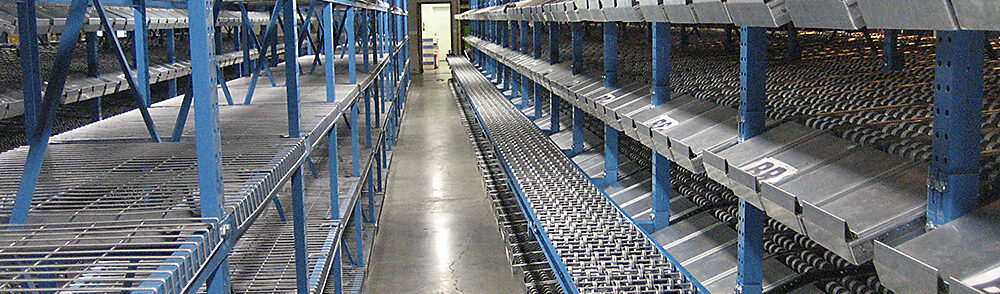
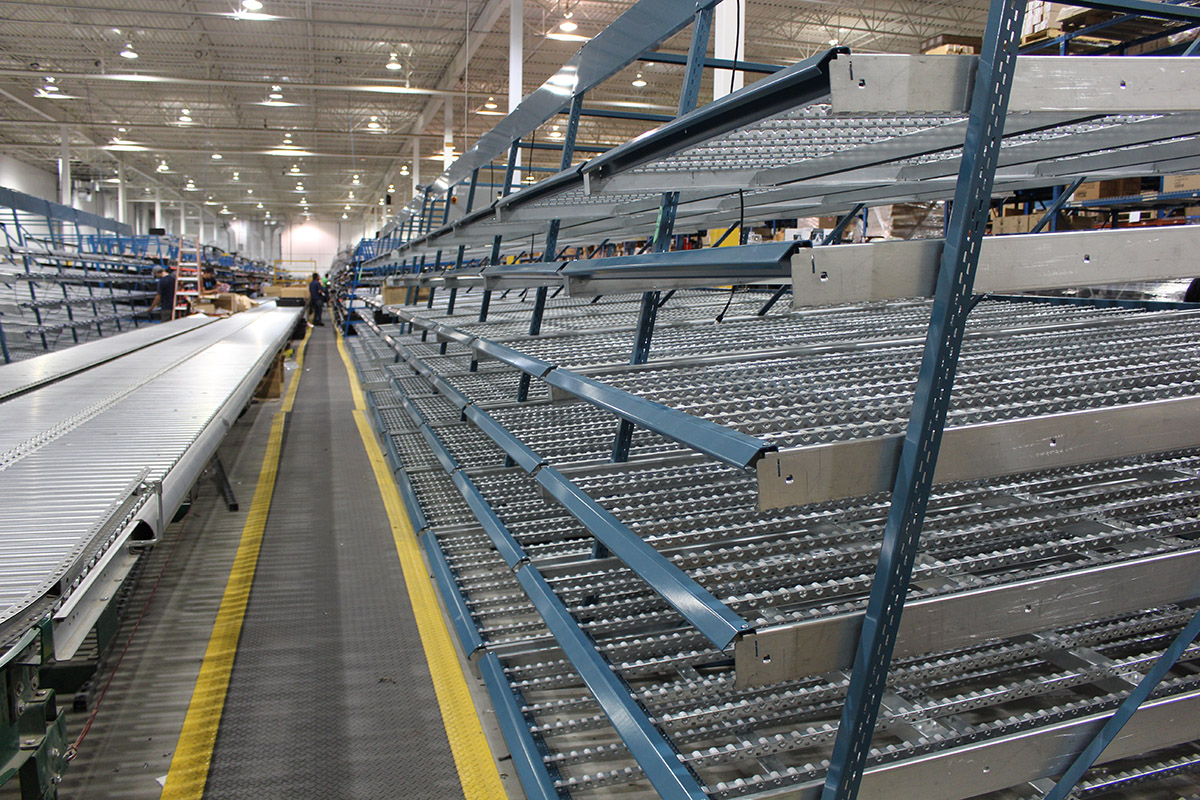
Carton flow racking fixes this with gravity. Lanes or beds of rollers or wheels are set at a slight slope. When a picker takes the front case, the next one rolls forward. The pick face always looks the same, which makes it faster to pick and easier to spot errors.
Because product loads at the back and picks from the front, the oldest stock always goes out first. That first-in, first-out (FIFO) rotation happens automatically, which matters for food, beverage and any product with a best-before date.
4. Keep restocking out of the pick aisle
Picking and replenishment often compete for the same space. A lift truck topping up a pick face blocks pickers. Pickers in the aisle slow down the restock. Neither job runs well.
The fix is to give each its own path. Options include:
- Restocking during a separate shift or quiet window.
- Using flow racking that is loaded from a rear replenishment aisle and picked from a front pick aisle.
- Designing a pick module where restocking happens from one side only.
Rear-loaded carton flow is the simplest version. Restockers never enter the pick aisle, so both jobs can run all shift.
5. Match the storage system to the product
No single storage system suits every product. The right choice depends on carton size and weight, packaging, how fast the item moves, and how often your product mix changes.
- Fast-moving cases: carton flow at the pick face.
- Full pallets of fast movers: pallet flow or pushback racking feeding the pick area.
- Slow movers and reserve stock: standard selective pallet racking or shelving.
- Long or awkward items: cantilever racking.
Picking cases straight off static pallets is common, but it is one of the biggest causes of fatigue and errors. Moving fast movers onto dynamic, self-feeding storage usually gives the biggest jump in performance.
Choosing a carton flow system: fixed lanes or wheel beds
Carton flow comes in two main styles. The right one depends mostly on how often your carton sizes change. Rack Systems Inc. works with UNEX SpanTrack carton flow, which comes in both styles.
| Fixed roller lanes (e.g. UNEX SpanTrack Lane) | Full-width wheel beds (e.g. UNEX SpanTrack Wheel Bed) | |
|---|---|---|
| How it works | Separate roller lanes, each sized to a product | A full shelf covered in staggered wheels; cartons can sit anywhere |
| Best for | Stable SKUs with consistent carton sizes | Changing product mixes, seasonal items, varied carton widths |
| Re-slotting | Lanes are moved to fit new products | Fast and tool-free; just place cartons where needed |
| Strengths | Keeps products in tidy, dedicated paths | Maximum flexibility and use of shelf width |
Both styles drop into standard pallet racking, are rated for cooler and freezer use, and are backed by a 7-year manufacturer warranty.
What Ontario warehouses should know before upgrading
You can often keep your existing racking. Carton flow can usually be added to pallet racking you already own, which makes it a cost-effective upgrade compared to a full redesign.
Check your load capacity first. Adding flow systems changes how weight sits on beams and uprights. Have the configuration reviewed against your racking’s rated capacities and update your load signage to match.
Ask about a Pre-Start Health and Safety Review (PSR). Ontario’s regulations can require a PSR when racking is installed or modified in certain situations. Whether one applies depends on your specific setup. Ask before work starts so it doesn’t delay your project.
Inspect what you already have. An upgrade is a good time to book a rack inspection. Damaged uprights or beams should be repaired before new loads are added.
Plan for your people. Good slotting and self-feeding storage reduce bending, reaching and heavy lifting. That supports your obligations under Ontario’s Occupational Health and Safety Act and can help reduce strain injuries.
Frequently asked questions
What is the difference between case picking and piece picking? Case picking pulls full cases or cartons to fill orders. Piece picking, also called each picking, pulls single units out of a case. Case picking is common in wholesale, retail replenishment and food distribution.
What is carton flow racking? Carton flow racking uses sloped lanes of rollers or wheels so cartons slide forward by gravity. When the front carton is picked, the next one moves into place. It is loaded from the back and picked from the front.
Can carton flow be added to my existing pallet racking? In most cases, yes. Systems such as UNEX SpanTrack drop into standard pallet racking. The configuration should be checked against your racking’s load capacity before installation.
Does carton flow support FIFO inventory rotation? Yes. Product is loaded at the back and picked from the front, so the oldest stock always ships first. This is important for food, beverage and dated products.
How do I know which products to put in carton flow? Start with your fastest-moving case-picked SKUs. Pull a report of picks per SKU over the last few months and move the top sellers into flow lanes at easy-reach heights.
Do I need a PSR to add carton flow in Ontario? It depends on your setup. Ontario can require a Pre-Start Health and Safety Review when racking is installed or modified in certain situations. Ask your racking supplier to confirm before work begins.
Can carton flow be used in coolers and freezers? Yes, freezer- and cooler-rated systems are available, including UNEX SpanTrack.

Ready to speed up your case picking?
For more than 35 years, Rack Systems Inc. has helped warehouses across Ontario convert space to profit. We can review your current layout, recommend the right mix of carton flow, pallet flow and racking, and handle installation from start to finish.
Book a free consultation: call 289-674-2200 or email info@racksystemsinc.com.
This article was inspired by our partners at UNEX Manufacturing.