Pallet Flow Racking
Get a Free On-site Assessment and Quotation
What Is Pallet FLow Racking?
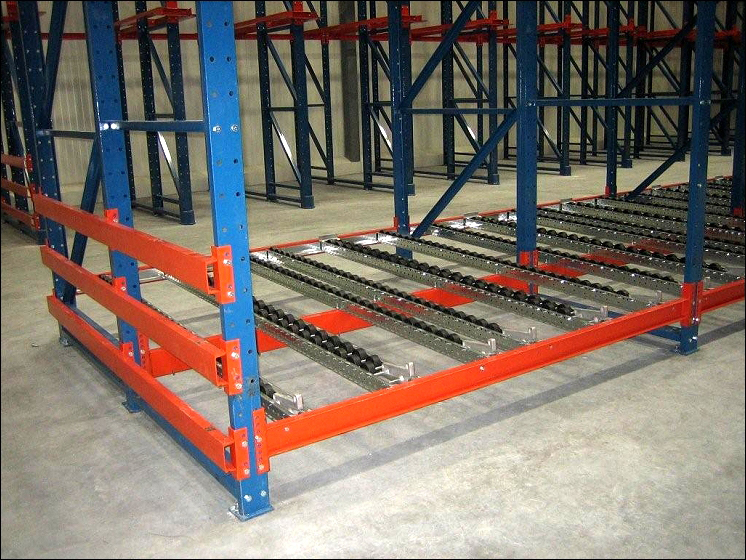
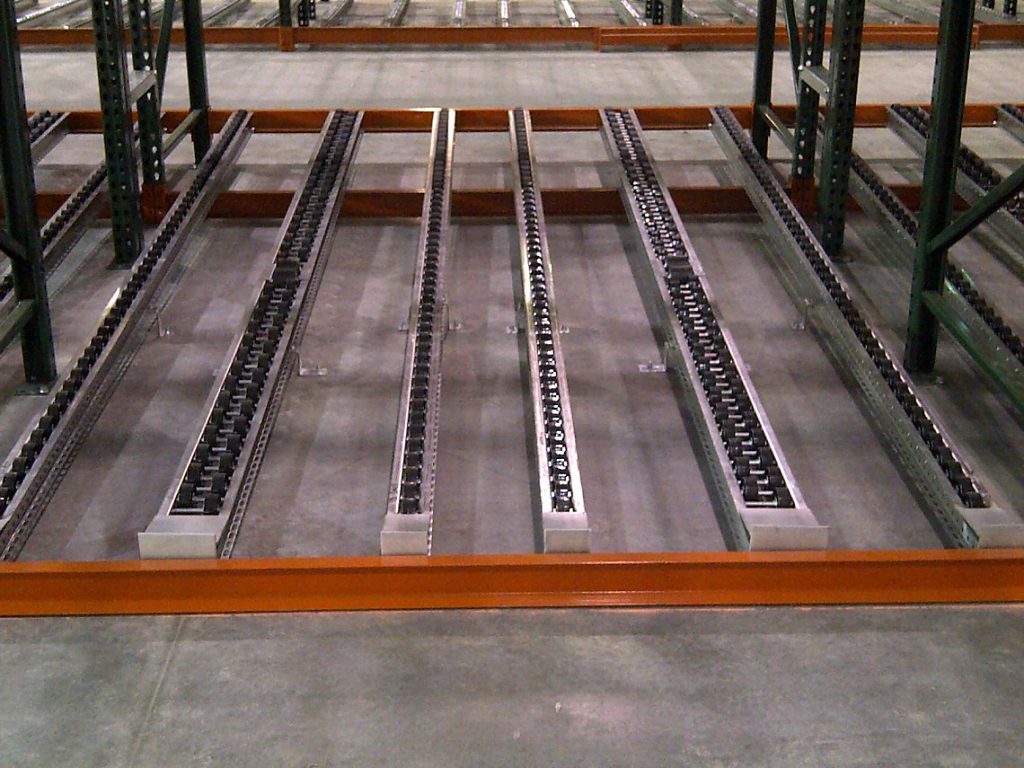
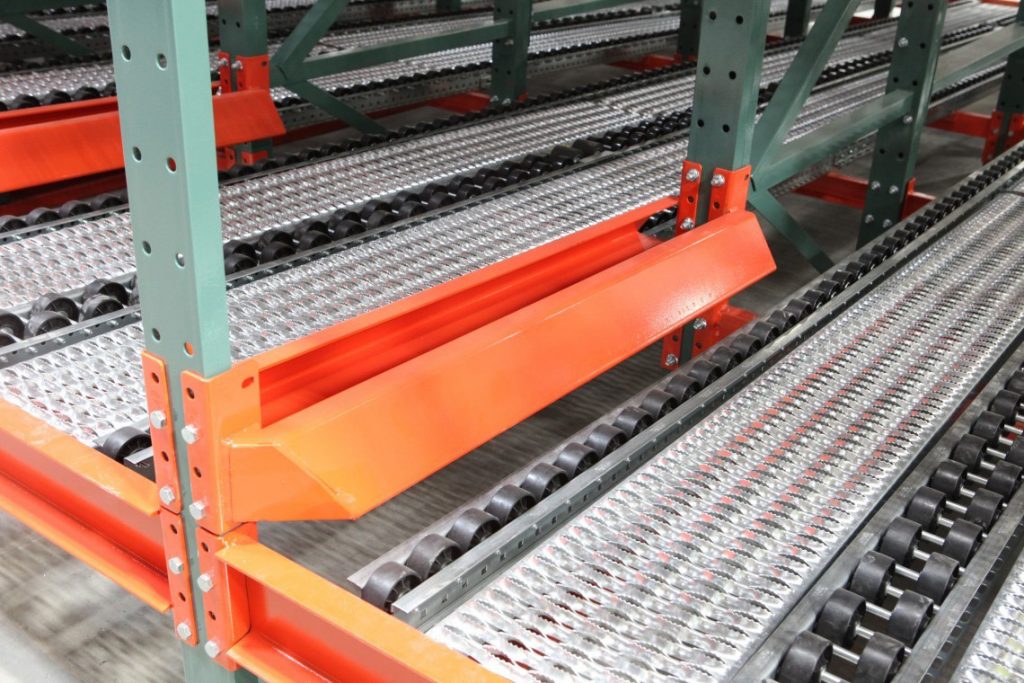
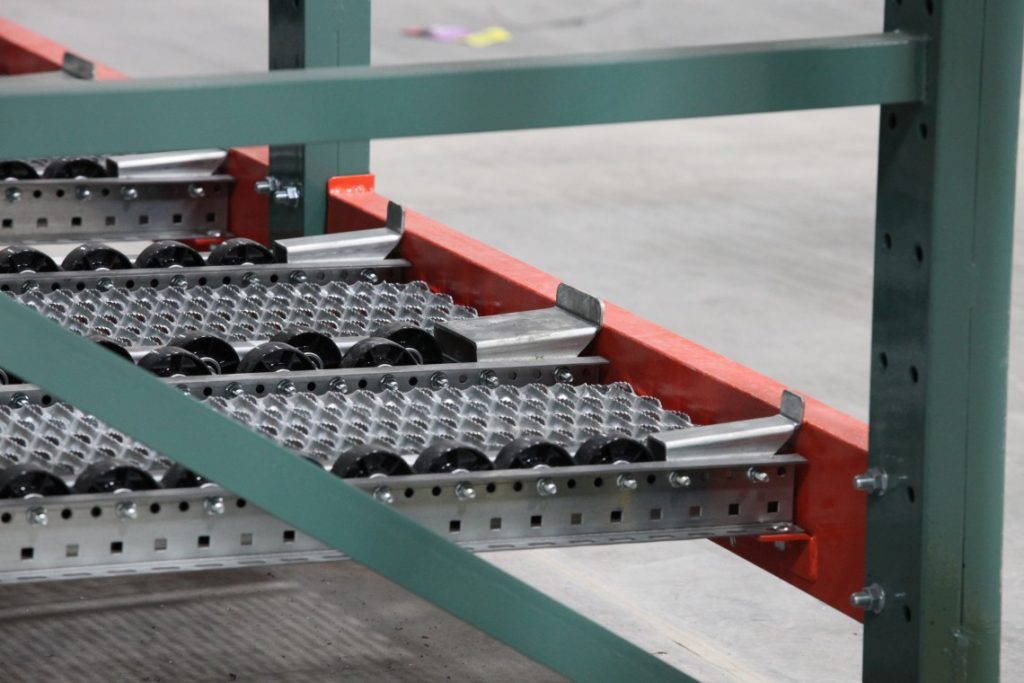
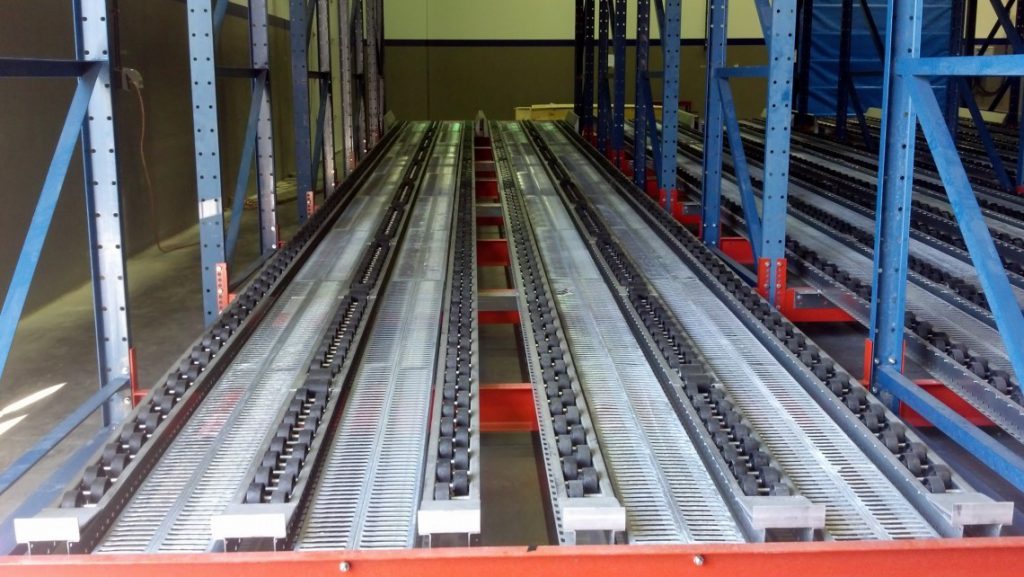
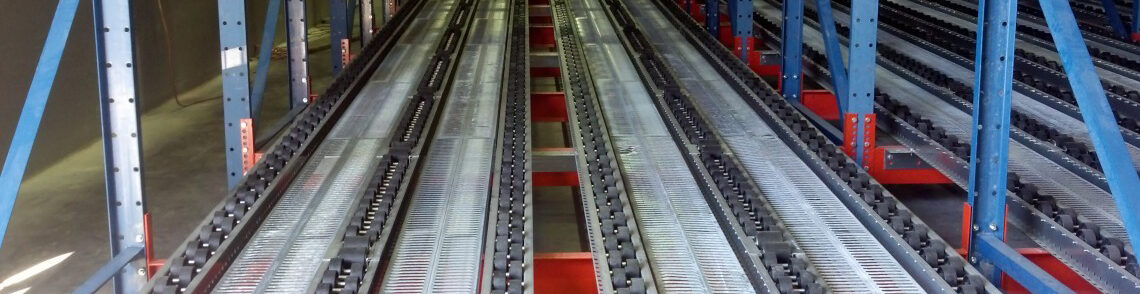
Pallet flow racking is a high-density, gravity-fed storage system: pallets are loaded at the high end of an inclined lane of rollers and glide automatically down to the pick face on a first-in, first-out (FIFO) basis. Because stock rotates in the order it arrives, it’s especially well suited to perishable, dated, or high-turnover inventory such as food and beverage products, and it significantly increases pallet positions per aisle compared to selective racking.
- FIFO Inventory Management
- Maximized Throughput
- Versatile Lane Options
Key Features of Pallet Flow Racking:
Pallet flow racking is defined by five features: FIFO inventory rotation, high-density deep-lane storage, an internal gravity conveyor system, enhanced storage capacity, and versatility across freezer, food distribution, and high-volume storage settings.
- First-In, First-Out (FIFO) Approach: Ensures that the first pallet loaded is the first pallet retrieved, making it perfect for managing perishable goods and products with expiration dates. This FIFO system helps maintain product freshness and reduces waste.
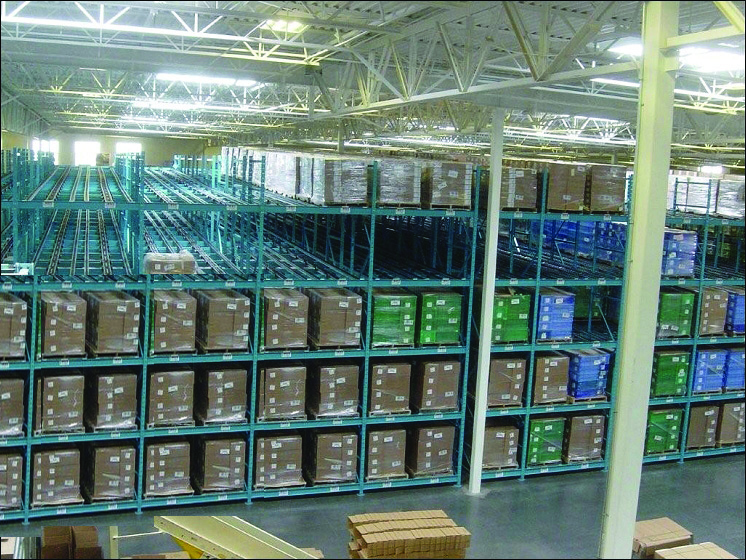
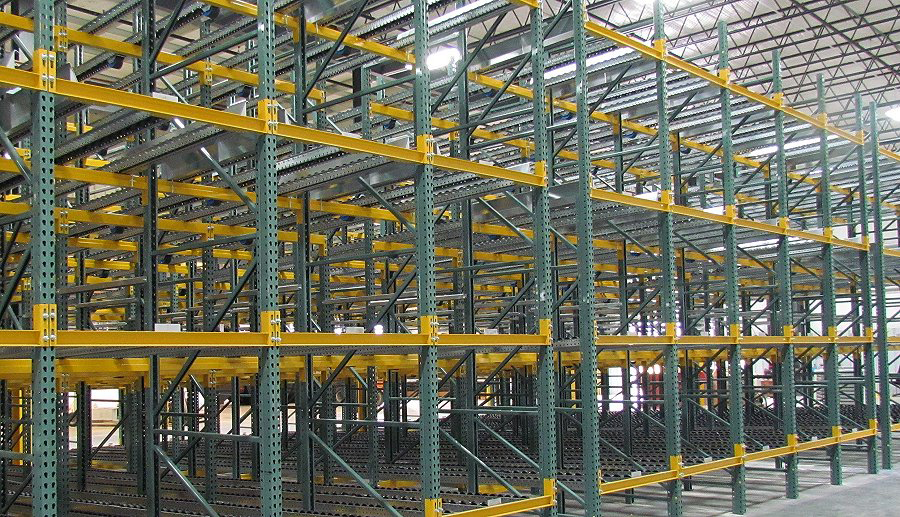
- High-Density Storage: Maximize your warehouse’s storage capacity with deep lane storage. Pallet Flow Racking allows for multiple pallets to be stored in a single lane, optimizing space utilization and increasing overall storage density.
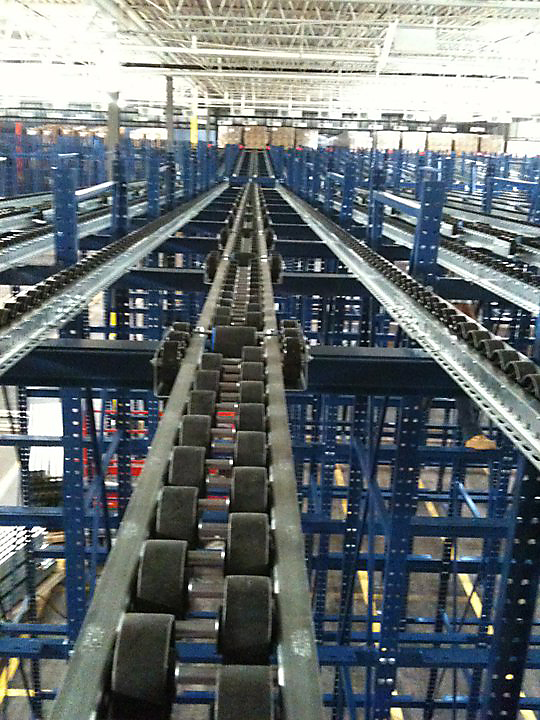
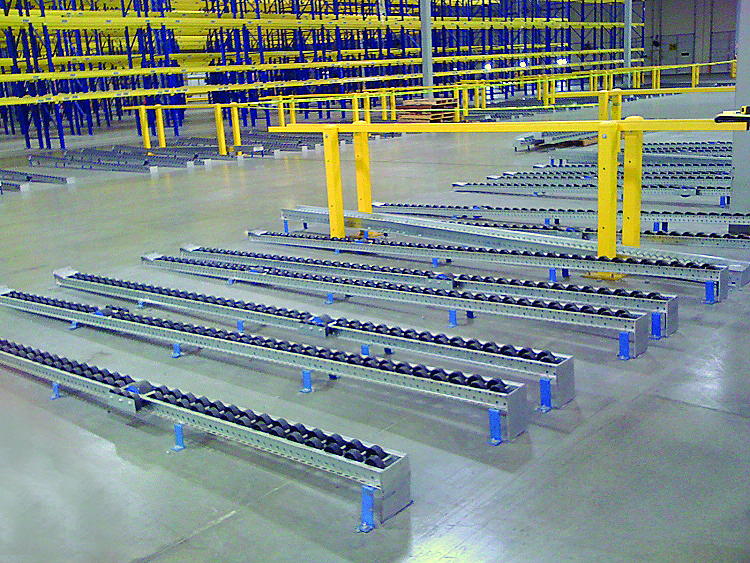
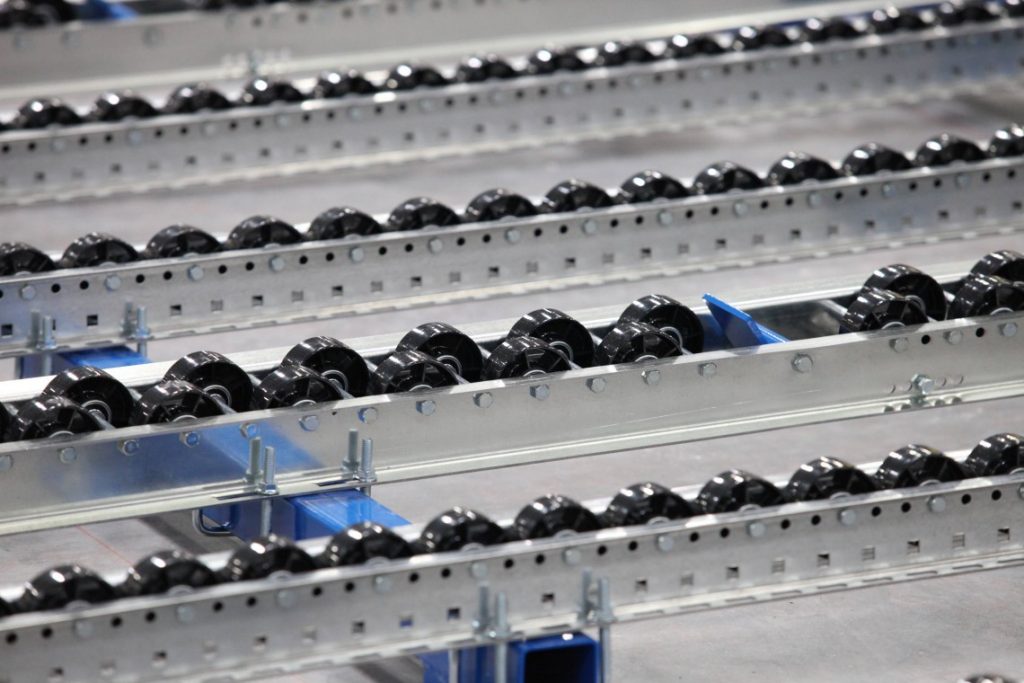
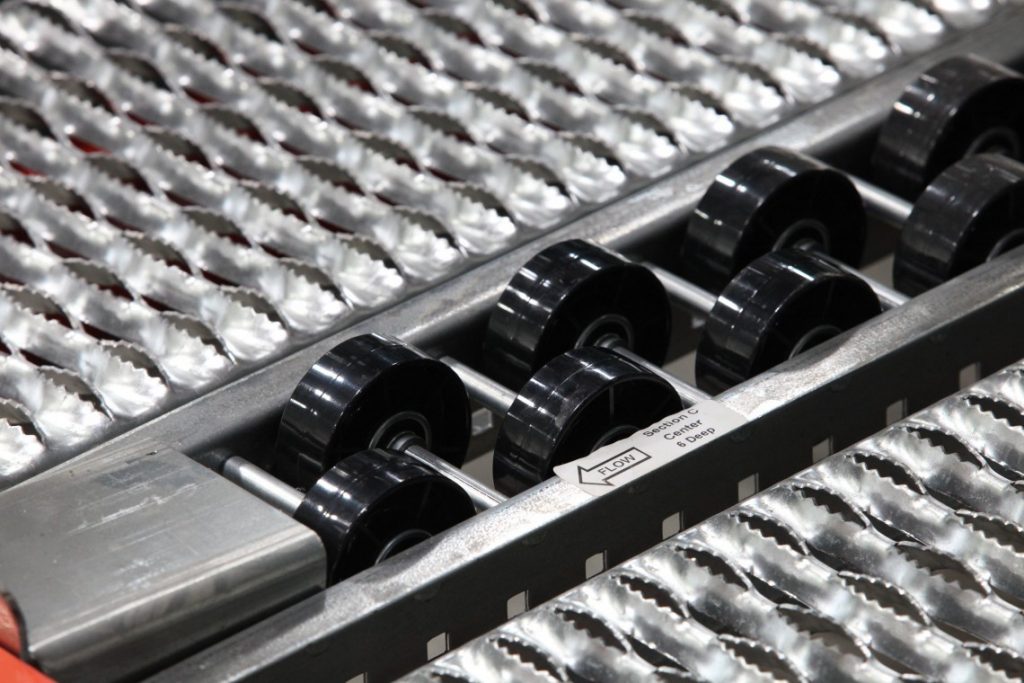
- Internal Conveyor System: The racking system acts as an internal conveyor, with pallets gliding down inclined rollers to the pick-up points. This smooth and efficient movement reduces handling times and enhances operational efficiency.
- Enhanced Storage Capacity: By accommodating deep storage lanes, Pallet Flow Racking significantly boosts the number of pallet positions in your warehouse. This increased capacity is crucial for businesses dealing with high-volume storage needs.
- Versatile Applications: Suitable for a variety of industrial settings, Pallet Flow Racking is designed to meet the storage needs of freezer warehouses, food distribution centers, high-volume consumer goods storage, and more. Its adaptability makes it a valuable addition to any storage facility.
Benefits of Pallet Flow Racking for Industrial Settings:
Pallet flow racking delivers five core benefits for industrial and warehouse operations: optimized space utilization, efficient FIFO stock rotation, increased productivity, versatility and flexibility, and an enhanced overall workflow.
- Optimized Space Utilization: Maximize your available storage space with a high-density racking system that accommodates multiple pallets per lane. This optimization is essential for space-constrained warehouses.
- Efficient Stock Rotation: The FIFO approach ensures that older stock is used first, maintaining product quality and reducing the risk of spoilage. This efficient stock rotation is vital for industries handling perishable goods.
- Increased Productivity: The internal conveyor system allows for quick and easy pallet retrieval, reducing handling times and boosting overall productivity. This efficiency translates to cost savings and improved operational performance.
- Versatility and Flexibility: Adaptable to various industrial applications, from freezer storage to food distribution and high-volume consumer goods. Its flexibility makes it suitable for diverse storage needs.
- Enhanced Workflow: Streamline your warehouse operations with a racking system that supports efficient order picking and dispatch. This improved workflow is crucial for 3PL warehouses and dispatch areas.
Ideal Applications of Pallet Flow Racking:
Pallet flow racking is best suited to five types of facilities: freezer warehouses, food distribution centers, high-volume consumer goods storage, 3PL warehouses, and dispatch areas.
- Freezer Warehouses: Optimize storage for temperature-sensitive products in low-temperature environments. Ensures efficient stock rotation and easy access to frozen goods.
- Food Distribution Centers: Enhance storage efficiency for perishable food items, ensuring rapid and accurate order fulfillment. The FIFO system helps maintain product freshness and quality.
- High-Volume Consumer Goods Storage: Manage high volumes of consumer goods with ease, maximizing storage capacity and ensuring quick access to products. This system supports efficient inventory management and order processing.
- 3PL Warehouses: Streamline operations for third-party logistics providers by optimizing storage space and improving order picking efficiency. This system supports diverse inventory management needs for various clients.
- Dispatch Areas: Facilitate efficient loading and unloading processes in dispatch areas, reducing handling times and enhancing overall productivity. This system ensures smooth and organized dispatch operations.
Pricing Table:
Pallet flow racking typically costs around $620 per pallet position for a large-scale Greater Toronto Area installation. Your actual quote will depend on project size, site conditions, and configuration.
| Configuration | Price per Pallet Position (CAD) |
|---|---|
| Pallet Flow | $620.00 |
Get a Free On-site Assessment and Quotation
Summary
Pallet Flow Racking by Rack Systems Inc. revolutionizes high-density storage with its first-in, first-out (FIFO) approach, making it an essential solution for businesses aiming to optimize pallet positions and ensure efficient stock rotation. With its internal conveyor system, deep storage lanes, and versatile applications. This system significantly enhances storage capacity and streamlines warehouse operations.
Discover how Pallet Flow Racking from Rack Systems Inc. can transform your storage capabilities, providing a scalable, efficient, and reliable solution for your industrial storage needs. Invest in Pallet Flow Racking to achieve unparalleled efficiency and productivity in your warehouse operations.
Frequently Asked Questions
As an example, GTA pallet flow racking projects of 150 or more pallet positions cost approximately $620 per pallet position, based on a standard 40″ x 48″ x 48″, 2,500 lb pallet. This figure excludes engineering and permit costs and will vary by project size, site conditions, and configuration. Contact Rack Systems Inc. for a free on-site assessment and a formal quote for your warehouse.
Pallet flow racking pricing is driven mainly by lane depth and total pallet positions, roller and wheel specifications, pallet weight and dimensions, project location, and whether engineering drawings and permits are required. Larger orders (150+ positions) typically reduce the per-position cost compared to smaller, custom projects.
Both are high-density, deep-lane systems, but pallet flow racking uses gravity and inclined rollers to move pallets automatically on a first-in, first-out (FIFO) basis, loaded from one end and picked from the other. Pushback racking uses carts on rails and operates last-in, first-out (LIFO), with pallets loaded and retrieved from the same aisle. Pallet flow suits perishable or dated inventory that must rotate in the order it arrives; pushback suits inventory where strict FIFO rotation isn’t required.
Yes. Because pallet flow racking moves inventory on a strict first-in, first-out basis, it’s especially well suited to perishable goods, dated inventory, and food and beverage products, helping ensure older stock is picked before newer stock and reducing spoilage.
Lane depth is engineered to the number of pallet positions needed and the available building depth, since deeper lanes increase density but each lane holds one SKU per level. Contact Rack Systems Inc. for guidance on the right depth for your product mix and warehouse layout.
Yes. Its FIFO rotation and internal gravity conveyor system support fast, organized picking and dispatch, making it a fit for 3PL warehouses, high-volume consumer goods storage, food distribution centers, and freezer warehouses.
Rack Systems Inc. is based in Hamilton, Ontario, and serves warehouses across the Greater Toronto Area and Southern Ontario. The pricing example on this page is based on GTA projects — contact us for a quote if your facility is elsewhere in Ontario.
Gallery